Table of Contents
- What are 5 Things That Cannot Be Recycled? (Quick List)
- 1) Plastic Bags, Film And Soft Plastics
- 2) Polystyrene Foam (EPS) Packaging And Cups
- 3) Nappies, Wet Wipes And Sanitary Products
- 4) Food-Soiled Packaging (E.g., Greasy Pizza Boxes, Dirty Takeaway Trays)
- 5) Electrical Items, Cables, Batteries And Vapes
- Why ‘Not Recyclable’ Often Means ‘Not Accepted In Your Local Bin’
- Common Recycling Mistakes That Cause Contamination
- Where To Take Items That Can’t Go In The Recycling Bin (UK Options)
- If The Item Is An Old Laptop Or Computer: Recycle It Safely (And Protect Your Data)
- FAQs
- Fun Fact: Why One Small Battery Can Cause A Big Fire
- Conclusion
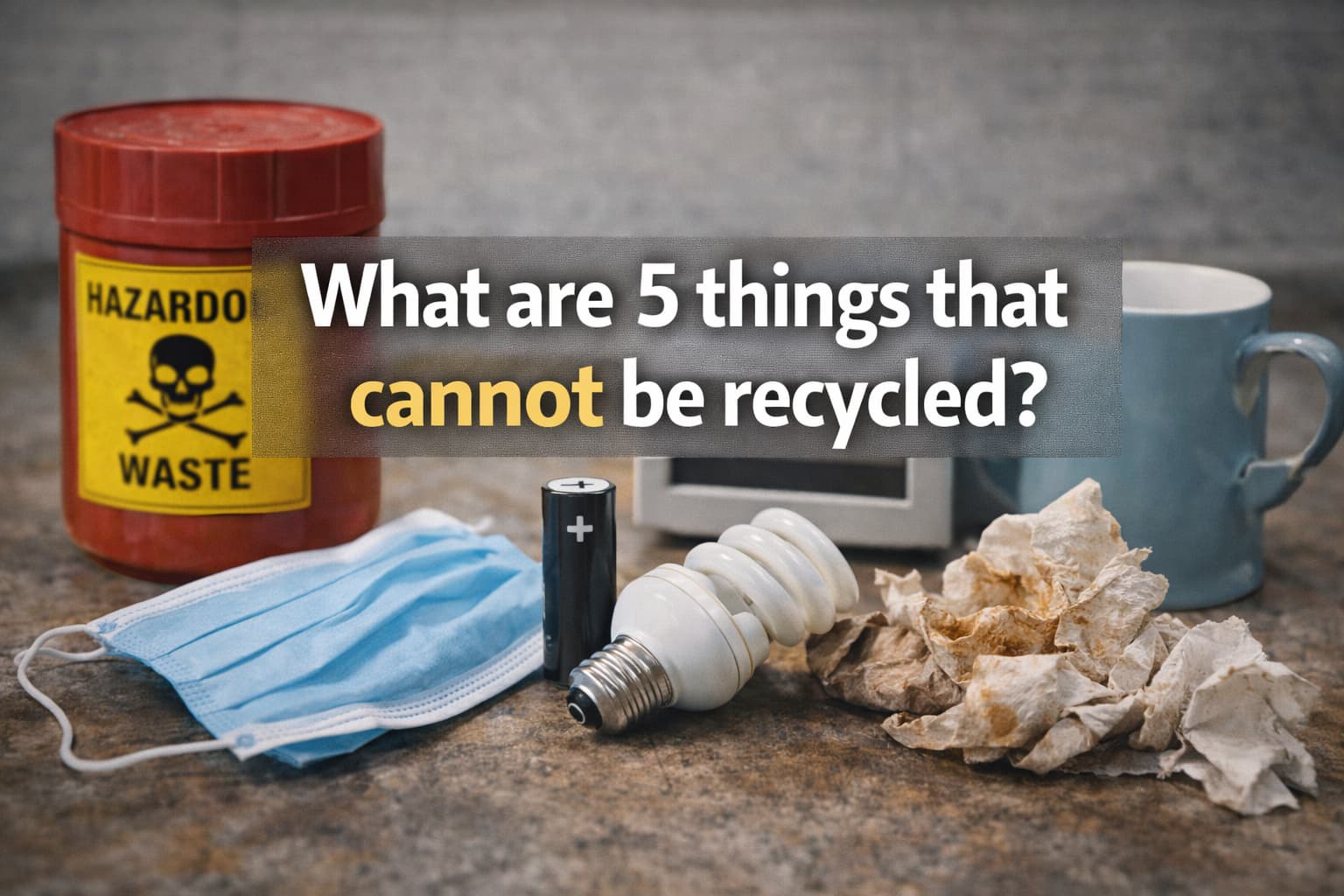
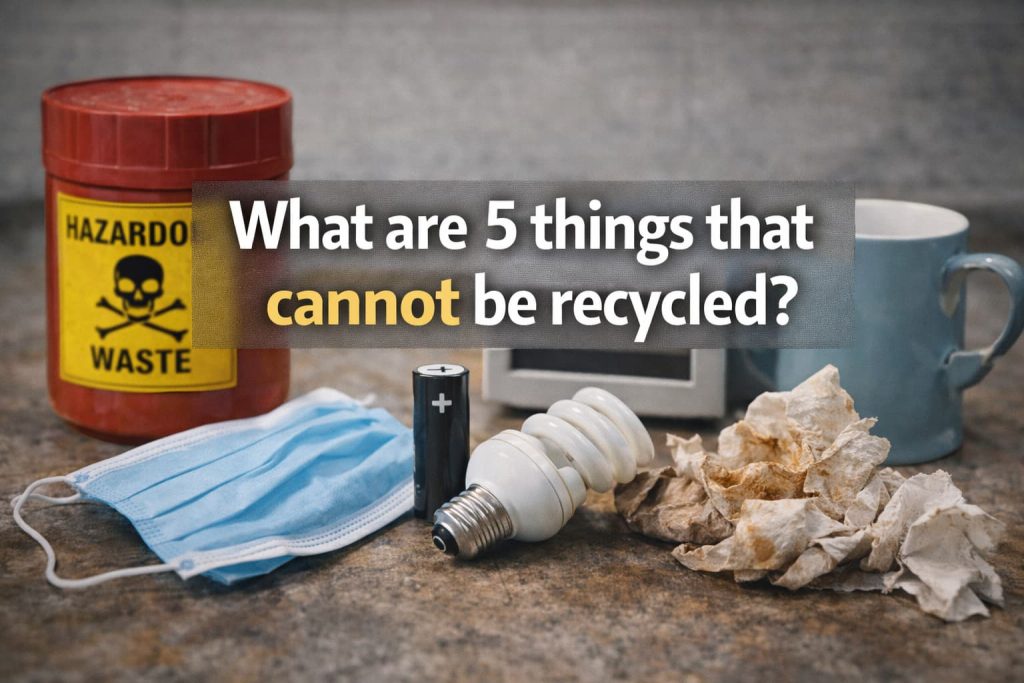
Direct Answer: Five common things that you cannot usually recycle in household recycling are: plastic bags and film, polystyrene foam, nappies and sanitary waste, food-soiled packaging (such as greasy pizza boxes), and electrical items or batteries. These items can contaminate sorting, damage equipment, or need specialist treatment. Use take-back schemes, council drop-off points, or WEEE recycling services instead.
Recycling rules can feel inconsistent, and in the UK, they often are. Different councils collect different materials. The safest approach is to learn the high-risk items that should almost never go in kerbside recycling, understand why they cause problems, and then use the right alternative route, such as a Household Waste Recycling Centre (HWRC) or a retailer take-back scheme.
UK Disclaimer: Always check your local council’s guidance, as accepted materials and collection methods vary by area. For help finding official local services, use GOV.UK: Dispose of household waste.
What are 5 Things That Cannot Be Recycled? (Quick List)
- Plastic bags, film and soft plastics: These often jam sorting machinery and are not widely accepted kerbside.
- Polystyrene foam (EPS) packaging and cups: These are low density, easily contaminated, and have limited UK recycling routes.
- Nappies, wet wipes and sanitary products: These are unhygienic and made from mixed materials that standard recycling cannot process.
- Food-soiled packaging: Grease and food residue can ruin paper and card fibres and contaminate other recyclables.
- Electrical items, cables, batteries and vapes: These are covered by WEEE rules and can pose fire risks if crushed in collection vehicles or facilities.
1) Plastic Bags, Film And Soft Plastics
Soft plastics include carrier bags, bread bags, cling film, crisp packet-style wrappers, wrapping from multipacks, and many squeezable pouches. Even if the packaging shows a recycling symbol, it may not be accepted in your household recycling bin.
Why They’re Rejected (Tangling In Sorting Machinery)
- Tangles at the recycling facility: Film can wrap around spinning screens and rollers. This causes blockages and shutdowns.
- Hard to sort accurately: Soft plastics are light and flexible. They are often made from mixed polymers that standard sorting lines cannot separate.
- Increases contamination: Loose film can trap food residue and liquids. This reduces the quality of paper, card, and plastics in the same load.
What To Do Instead (Supermarket Soft-Plastic Collection, Reuse)
- Use supermarket collection points: Many larger supermarkets provide front-of-store bins for soft plastics. Accepted items vary, so check the signage.
- Reuse where possible: Keep clean bags for shopping or as bin liners, where appropriate.
- If you cannot find a local soft-plastic route: Put it in your general waste. Do not “wishcycle” it into kerbside recycling.
2) Polystyrene Foam (EPS) Packaging And Cups
Expanded polystyrene (EPS) is the lightweight white foam often used for protective packaging, takeaway boxes, and disposable cups.
Why It’s Hard To Recycle (Low Density, Contamination, Limited UK Acceptance)
- Low density, high volume: EPS takes up lots of space but contains little material. Collection and transport can be uneconomic.
- Contaminates easily: Food, drink, and tape residue are common. This can make recycling harder or impossible.
- Limited kerbside acceptance: Many councils do not accept EPS in household recycling. It does not fit standard processing streams.
What To Do Instead (Return Schemes, Specialist Drop-Offs Where Available)
- Check for specialist drop-off: Some HWRCs or local schemes accept EPS, but this is not universal.
- Ask the retailer or supplier: Some suppliers offer take-back, especially for bulky protective packaging.
- If no option exists locally: Place EPS in general waste rather than contaminating recycling.
3) Nappies, Wet Wipes And Sanitary Products
This category includes disposable nappies, incontinence pads, sanitary towels, tampons, cotton buds, and most wet wipes. Even wipes labelled “flushable” should not be flushed. They are also not suitable for recycling.
Why They Can’t Be Recycled (Hygiene And Mixed Materials)
- Hygiene risk: These items can carry bodily fluids and pathogens. This makes them unsafe for manual handling at sorting facilities.
- Mixed materials: Many products combine plastics, absorbent gels, and fibres. Standard recycling processes cannot separate them.
- They contaminate whole loads: A single item can leak and spoil paper and card. That can lead to rejection or downcycling.
Better Options (Reduce, Reusable Alternatives, Correct Disposal)
- Dispose of them in general waste: Bag items securely and put them in your residual waste bin.
- Consider reusable alternatives: Reusable nappies and menstrual products can cut waste significantly, if they suit your household.
- Never put them in the recycling bin: This is a common cause of contamination for crews and facilities.
4) Food-Soiled Packaging (E.g., Greasy Pizza Boxes, Dirty Takeaway Trays)
Clean paper, card, and many rigid plastic containers can often be recycled. The issue is packaging soaked in grease, sauce, or food scraps.
When Cardboard Is Recyclable Vs When It Isn’t
- Usually recyclable: Clean, dry cardboard, such as delivery boxes and cereal cartons.
- Usually not recyclable: Cardboard saturated with oil or food, such as the greasy base of a pizza box.
- Why it matters: Grease and food residue can stop paper fibres from bonding properly. It can also contaminate other dry recyclables.
What To Do Instead (Remove Clean Parts, Composting, Food Waste Bin)
- Separate clean from dirty: Tear off the clean lid of a pizza box for recycling. Put the greasy base in food waste or general waste.
- Use your food waste bin where available: Tip leftover food into your council food waste caddy.
- Compost at home if suitable: Some lightly soiled paper and card can be composted. Heavily greasy material may attract pests.
5) Electrical Items, Cables, Batteries And Vapes
If it has a plug, a cable, a battery, or a circuit board, it should not go in your kerbside recycling. This includes small electricals (toasters and hair dryers), cables and chargers, toys with electronics, laptops, phones, and disposable or rechargeable vapes.
Why They Don’t Belong In Kerbside Recycling (Fire Risk And WEEE Rules)
- Fire risk: Lithium batteries can ignite if crushed or damaged in collection vehicles or sorting facilities.
- WEEE compliance: Electricals must be handled through proper Waste Electrical and Electronic Equipment routes. They should not be mixed with packaging recyclables.
- Different treatment is required: Electrical waste contains recoverable metals and plastics, and sometimes hazardous components. It needs specialist processing.
For the official framework behind this, see GOV.UK: WEEE regulations guidance. If you are unsure whether an item counts as WEEE, this guide on whether WEEE items can go in the bin is a helpful starting point.
What To Do Instead (WEEE Recycling, Retailer Take-Back, Battery Drop-Off)
- Use an HWRC: Most Household Waste Recycling Centres have separate areas for small electricals, cables, and batteries.
- Use retailer take-back: Many shops that sell batteries and electrical items offer collection bins or take-back options.
- Handle vapes as electrical waste: Avoid putting them in recycling or general waste. Use a vape recycling point or an HWRC route.
Safety Tip: If a battery looks swollen, damaged, or hot, isolate it from flammable materials and follow your council’s guidance for safe drop-off. Do not tape over vents. You can place individual batteries in a non-metal container to reduce short-circuit risk during transport.
Why ‘Not Recyclable’ Often Means ‘Not Accepted In Your Local Bin’
Two statements can both be true:
- An item is technically recyclable: It can be recycled somewhere with the right equipment and a stable end market.
- An item is not accepted in your kerbside recycling: Your local collection and sorting system cannot handle it cost-effectively or safely.
Different Councils Accept Different Materials
In the UK, councils use different collection methods and contracts. For example, one area may accept pots, tubs and trays, while another may only accept bottles. Some councils accept cartons, while others do not. That is why checking local guidance matters more than guessing based on the symbol.
How To Check: Council Guidance, On-Pack Labels, Recycle Now
- Your council website: Look for a “what goes in which bin” page and search by item.
- On-pack labels (OPRL): Labels such as “Recycle” or “Do Not Recycle” reflect typical UK collection. Still, double-check against your council rules.
- Use a national lookup tool: The GOV.UK household waste tool helps you find local services by postcode.
Common Recycling Mistakes That Cause Contamination
Contamination is one of the biggest reasons recycling is rejected or downcycled. When in doubt, leaving a questionable item out is often better than adding it and risking the whole load.
Bagging Recyclables, Leaving Food Residue, Mixing Materials
- Putting recycling in bin liners: Many facilities cannot open and empty black sacks. Bagged recycling may be treated as general waste.
- Leaving food and liquid inside: Residue can soak paper and card. It can also create odours and attract pests.
- Not separating mixed materials: Examples include leaving a pump on a shampoo bottle, or leaving a film window attached to a paper envelope when you could remove it.
Simple ‘Rinse, Empty, Separate’ Checklist
- Empty: Tip out liquids and scrape out food.
- Quick rinse if needed: A light rinse is usually enough. You do not need to make it spotless.
- Dry: Let items drain so paper and card stays dry.
- Separate: Remove easy-to-remove parts made from different materials.
- Do not bag: Put recyclables loose in your bin or box, unless your council explicitly says otherwise.
Where To Take Items That Can’t Go In The Recycling Bin (UK Options)
If something cannot go in your kerbside recycling, there is often still a responsible route for it. This is especially true for electricals and batteries.
Household Recycling Centres (HWRCs) And Kerbside Restrictions
HWRCs (also called tips or recycling centres) typically accept a wider range of materials than kerbside collections. You can usually take:
- Small electrical items: Such as kettles, hair straighteners, and games consoles.
- Batteries: Including household batteries and, in some places, small lithium packs.
- Mixed plastics and bulky items: Depending on the site and your council rules.
To find your nearest HWRC and what it accepts, start with GOV.UK: Dispose of household waste.
Retailer Take-Back Schemes (Batteries, Small Electricals, Soft Plastics)
- Batteries: Many supermarkets and electrical retailers provide battery drop-off points.
- Small electricals: Some retailers provide in-store return options for WEEE.
- Soft plastics: Front-of-store collection bins may accept film and bags. Check the accepted list carefully.
If The Item Is An Old Laptop Or Computer: Recycle It Safely (And Protect Your Data)
Data-bearing electronics are not “just another recyclable”. They can contain personal information, passwords, and financial details. For businesses, they may also contain client data and confidential files. That creates legal and reputational risk if the device is not handled correctly.
Why WEEE Recycling Is Different From General Recycling
- Specialist treatment: Electronics contain batteries, circuit boards, and metals that need controlled dismantling and processing.
- Documentation matters: Organisations often need evidence of compliant disposal and secure handling.
If you want a deeper look at the process, see how electronic waste is recycled.
What To Look For: Secure Data Wiping And Documentation
- Secure data removal: Choose a service that offers secure data wiping or physical destruction, where appropriate.
- Chain of custody: Especially important for businesses, to show who handled the equipment and when.
- Paperwork: Ask what records you will receive after WEEE disposal.
Green Retech Recycling supports customers who want to dispose of old IT equipment responsibly. If you are planning an IT clear-out, these guides may help you set expectations: the safest way to dispose of old IT equipment, whether data is removed before recycling, and what paperwork you receive after WEEE disposal.
FAQs
Can I Recycle Black Plastic?
Sometimes. Black plastic trays and tubs can be hard for older sorting systems to detect, so acceptance varies by council and by plastic type. Check your local guidance and any on-pack recycling label. If your council does not accept it, put it in the general waste rather than guessing.
Can I Recycle Crisp Packets?
Usually not in kerbside recycling, because many crisp packets are made from mixed materials (often plastic and metallised film). Some specialist collection schemes exist, but they are not universal. If you cannot access a dedicated drop-off, put them in the general waste.
Do I Need To Wash Containers Before Recycling?
You do not need to deep-clean them. A quick rinse and drain is usually enough to prevent smells and contamination. If an item is heavily soiled with grease or food that will not come off easily, it is often better placed in general waste, or food waste, where appropriate, than in recycling.
Fun Fact: Why One Small Battery Can Cause A Big Fire
A single lithium-ion battery hidden inside a vape or small gadget can trigger a fire in a collection vehicle or recycling facility if it is crushed. That is one key reason batteries and WEEE must be kept out of kerbside recycling.
Conclusion
If you remember one rule, make it this: keep soft plastics, polystyrene, hygiene waste, food-soiled packaging, and anything electrical or battery-powered out of your kerbside recycling. These items are among the most common causes of contamination, rejected loads, and safety incidents.
When you need to dispose of electricals properly, using a WEEE-compliant route is essential. For households, that often means an HWRC or retailer take-back. For organisations dealing with laptops, PCs, and IT equipment, Green Retech Recycling can help you arrange secure, documented recycling that protects data as well as the environment. If you are unsure where to start, see what happens to data on old computers and laptops and which items are not covered under WEEE regulations.
Reviewed For Accuracy: This article reflects common UK kerbside recycling restrictions and WEEE handling principles. Always confirm details with your local council, and follow official disposal guidance from GOV.UK and GOV.UK WEEE guidance.