Table of Contents
- What Is Secure Hard Drive Shredding?
- When Do Businesses Need Hard Drive Shredding?
- What To Expect From A Secure Hard Drive Shredding Service
- How To Choose A Secure Hard Drive Shredding Company (UK Checklist)
- Questions To Ask Providers Before You Book
- Costs: What Affects The Price Of Hard Drive Shredding?
- Alternatives To Shredding (And When Not To Use Them)
- FAQ: Secure Hard Drive Shredding
- Fun Fact: Hard Drives Hide Powerful Magnets
- Conclusion
Secure hard drive shredding is a physical data destruction service where drives are collected (or shredded on-site), destroyed to an approved particle size, and documented with a full chain of custody and a Certificate of Destruction. In the UK, choose providers with robust security controls, auditable processes, and compliant disposal routes for WEEE and UK GDPR.
Organisations searching for “companies offering secure hard drive shredding services” are rarely looking for a random list. They need a provider they can defend in an audit, one that protects sensitive data, proves exactly what was destroyed, and disposes of remaining materials responsibly. This guide explains what the service should include, what evidence to request, and how to choose a UK supplier with confidence.
If you want help scoping a collection, setting reporting requirements, or using a blended approach (wipe for reuse, shred for high-risk media), start with Green Retech Recycling secure data destruction, and we will advise on the most suitable route for your assets and risk level.
What Is Secure Hard Drive Shredding?
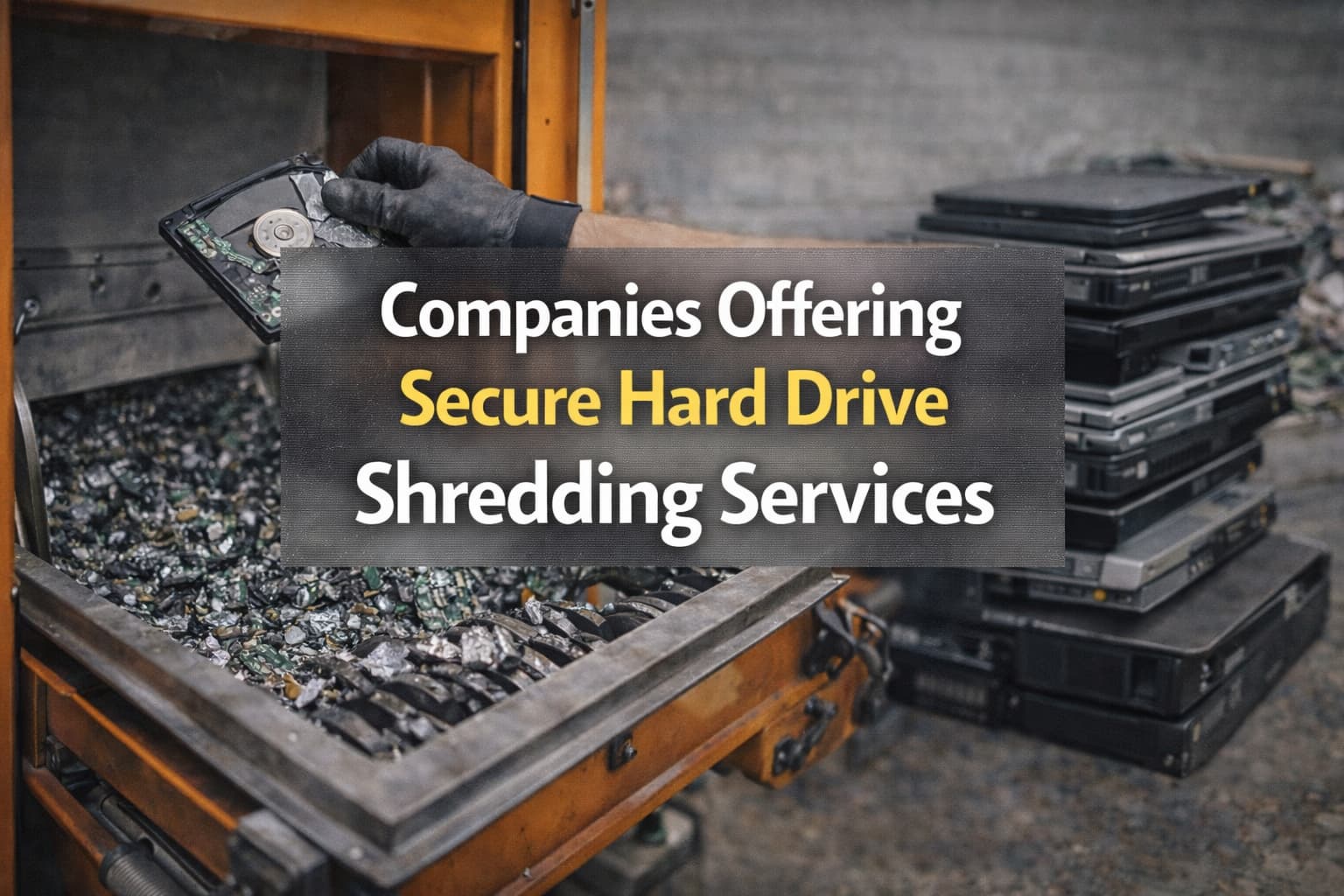
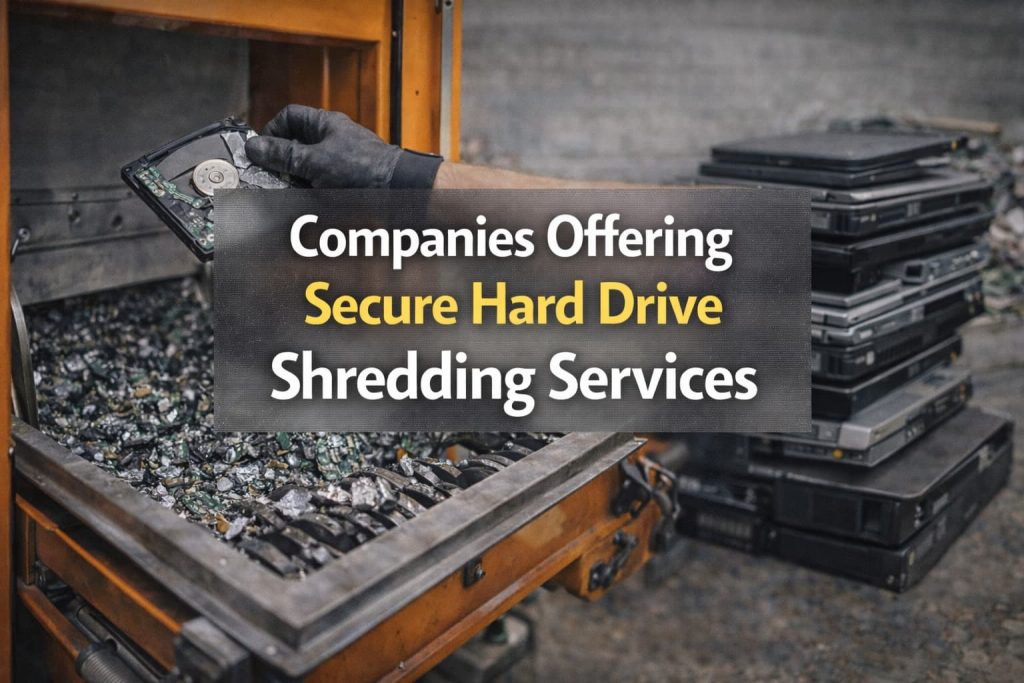
Secure hard drive shredding is the physical destruction of storage media, typically using an industrial shredder that breaks drives into small fragments. The goal is to make data recovery impractical while providing documented proof that specific drives were destroyed.
A credible hard drive destruction service in the UK should include:
- Secure Collection or On-Site Destruction: A controlled process that reduces the risk of loss, theft, or swapping of media.
- Chain of Custody: Recorded handovers from your site through to destruction and downstream recycling.
- Serial Number Capture (Where Required): Asset register reconciliation, so you can show what happened to each drive.
- Certificate of Destruction: A formal record of the method, date, location, and identifiers.
- WEEE Compliant Recycling: Responsible processing of shredded remnants and recovery of materials.
How Shredding Differs From Wiping And Degaussing
These terms are often used interchangeably, but they are not the same. Choosing the wrong method can create compliance risk.
- Shredding (Physical Destruction): Physically breaks the drive so the platters or memory chips are destroyed. This is often preferred for highly sensitive data, failed drives, or unknown asset histories.
- Data Wiping (Software Sanitisation): Uses approved software processes to overwrite or cryptographically erase data. Wiping can support reuse and resale, but the drive must be functional, and the process must be verified.
- Degaussing: Uses a strong magnetic field to disrupt magnetic media. It can be effective for some HDDs and tapes, but it is not suitable for SSDs and is less practical for many modern storage types.
For UK best-practice security framing, it helps to align disposal with broader cyber security controls, such as those described by the National Cyber Security Centre (NCSC) 10 Steps to Cyber Security.
HDD Vs SSD: Which Destruction Method Is Most Reliable?
HDDs (hard disk drives) and SSDs (solid state drives) behave differently, and that affects the reliability of each destruction method.
- HDD Shredding: Highly reliable when the platters are physically destroyed and shredded to an appropriate particle size.
- SSD Risks (Wear Levelling And Remapped Blocks): SSD controllers can move data around the memory chips. A basic wipe may not always provide the same assurance as physical destruction, especially for failed drives or drives with unknown configurations.
- Best Practice For SSD Destruction: For high-risk data or failed SSDs, physical destruction of the memory chips is commonly preferred.
If you are deciding between reuse and destruction, this overview of secure data destruction helps clarify when each method is most appropriate.
When Do Businesses Need Hard Drive Shredding?
Businesses typically choose secure media destruction when they need maximum assurance, clear proof, and low operational risk.
IT Refreshes, Decommissioning And Asset Disposal
Hard drive shredding is common during:
- End Of Lease Returns: Where devices must be sanitised before handback.
- Data Centre Decommissioning: Large volumes, strict chain of custody, and rapid turnaround requirements.
- Office Moves or Consolidations: Mixed assets and incomplete records, where reconciliation matters.
- IT Asset Disposal (ITAD) Projects: Where you need one provider for collection, reporting, destruction, and compliant recycling.
For combined collection and disposal workflows, see Green Retech Recycling IT asset disposal and IT equipment recycling.
Data Breach Risk And Legal Exposure
Improper disposal creates real risk. Lost media, incomplete wiping, or untracked handovers can all become reportable incidents. UK organisations should ensure that disposal aligns with UK GDPR principles, including appropriate technical and organisational measures. The ICO UK GDPR guidance is a useful reference point when designing and evidencing disposal controls.
What To Expect From A Secure Hard Drive Shredding Service
A reputable provider should explain its process clearly and provide evidence, not just marketing claims. Below is what procurement teams and IT or security leads typically need to see.
On-Site Shredding Vs Off-Site Shredding
Both options can be secure if controls are strong. The right choice depends on your risk level, volume, and site access.
- On-Site Hard Drive Shredding: Drives are destroyed at your premises. This can reduce transport risk and support witnessed destruction. It may cost more due to vehicle, staffing, and access requirements.
- Off-Site Hard Drive Destruction: Drives are collected securely and destroyed at a specialist facility. This can be efficient for high volumes and allows fixed-site controls such as secure storage bays and permanent CCTV coverage.
If you need a secure uplift arranged across multiple sites, Green Retech Recycling collection services and service locations can help you plan the logistics.
Collection, Tamper-Evident Containers And Transport Security
The chain of custody starts at your door. Look for practical controls like:
- Tamper-Evident Containers or Seals: Unique seal numbers recorded at collection and verified on arrival.
- Secure Handling Procedures: Controlled loading, minimal dwell time, and restricted access to media.
- Tracked Transport and Secure Vehicles: Documented routes, secure compartments, and clear handover responsibilities.
Chain Of Custody, Audit Trail And Reporting
An auditable destruction process should produce an evidence trail you can retain for compliance and internal governance. Common reporting fields include:
- Collection Details: Date, time, site address, consignment reference, seal numbers, and driver ID.
- Asset Details: Drive type (HDD or SSD), make and model, capacity, and serial number capture where required.
- Transfer Points: Each custody handover, with timestamps and responsible persons.
- Destruction Record: Method, particle size target, equipment ID, facility location, and operator sign-off.
- Exception Handling: Damaged labels, missing serials, or discrepancies, and how they were resolved.
How We Measure Success (Example KPIs):
- Turnaround Time: Destruction completed within an agreed SLA after collection.
- Reconciliation Accuracy: 100% match between collected items and destruction records, or documented exceptions.
- Reporting Cadence: Reports issued within a set number of working days.
- Audit Readiness: Evidence pack available on request (SOPs, training, incident logs, and certificates).
Certificate Of Destruction: What It Should Include
A vague “certificate available” is not enough. A robust Certificate of Destruction should include the information an auditor will ask for.
Minimum Certificate Fields To Request:
- Customer Name and Collection Reference: The job or consignment identifier linking the certificate to your uplift.
- Date and Time of Destruction: When destruction took place, not just the collection date.
- Destruction Location: The on-site address or the facility address.
- Destruction Method: Shredding, degaussing, or wiping, plus the process standard used.
- Particle Size or Output Specification: The shredding level achieved, where applicable.
- Asset Identifiers: Serial numbers, quantities, and any reconciliation notes.
- Authorisation: Operator name or ID, signature, and witness details if witnessed.
Green Retech Recycling can provide secure destruction documentation as part of an auditable service. Learn more via our guide to secure data destruction company services.
How To Choose A Secure Hard Drive Shredding Company (UK Checklist)
When comparing companies offering secure hard drive shredding services, use a checklist that covers security, compliance, reporting, and environmental responsibility.
Security Controls: Access, CCTV, Vetted Staff And Site Procedures
- Controlled Access: Restricted areas, visitor logs, and physical barriers around media handling zones.
- CCTV Coverage: Coverage of intake, storage, and destruction areas, with clear retention policies.
- Vetted Staff: Background screening appropriate to the sensitivity of the work.
- Documented SOPs: Written procedures for collection, storage, destruction, incident management, and reporting.
- Secure Storage Before Destruction: Locked cages or secure rooms with recorded access.
Standards And Compliance To Look For
No single badge guarantees security, but credible providers can show how they manage information security and operational controls.
- ISO/IEC 27001 Alignment: Evidence of an information security management system (ISMS) and audit discipline. See the BSI overview of ISO/IEC 27001 for what it covers.
- UK GDPR Awareness: Clear understanding of security obligations and how disposal evidence supports compliance. Refer to the ICO guidance.
- Audit-Friendly Reporting: Serial capture, reconciliation, and certificates that stand up to internal and external audits.
For a practical selection framework, see how to choose a secure data destruction service.
Environmental Compliance: WEEE Duty Of Care And Downstream Assurance
After shredding, you still have waste streams that must be handled legally and responsibly. In the UK, organisations have a duty of care when transferring waste to third parties, and e-waste treatment must meet WEEE requirements.
- WEEE Compliance: Ask where shredded remnants go and how metals and plastics are recovered, aligned with the WEEE Regulations 2013.
- Duty Of Care Records: Confirm waste transfer documentation and retention practices. See GOV.UK waste duty of care guidance.
- Downstream Assurance: Request confirmation of authorised treatment facilities and how material recovery is verified.
To understand compliant e-waste routes, visit Green Retech Recycling WEEE recycling and our policies.
Insurance, Risk Management And Incident Processes
- Appropriate Insurance: Confirm cover for data-bearing assets in transit and on-site.
- Incident Response: A documented process for loss, damage, or discrepancies, including escalation and reporting timelines.
- Service Level Agreements: Agreed SLAs for collection, destruction turnaround, and reporting delivery.
Questions To Ask Providers Before You Book
These questions help you separate secure, auditable providers from vague claims.
What Particle Size Do You Shred To And Why Does It Matter?
Particle size matters because it affects the feasibility of reconstruction and recovery. Your provider should be able to explain:
- The Target Output Size: The destruction level they commit to for HDDs and SSDs.
- How It Is Verified: Process controls, equipment maintenance, and quality checks.
- How Exceptions Are Handled: What happens if a drive is damaged, jammed, or incomplete?
Can You Provide Serial Number Capture And Reconciliation?
If you maintain an asset register, serial capture can be critical. Ask whether they can:
- Record Serials At Collection: So you can reconcile quickly.
- Record Serials At Destruction: So the certificate matches your inventory.
- Provide Exception Reports: For missing or illegible serials, with your approval on how to proceed.
How Are Drives Stored Before Destruction?
This is where weak processes often fail. Ask for specifics on:
- Maximum Storage Time: The SLA from collection to destruction.
- Storage Security: Locked areas, access logs, and CCTV coverage.
- Segregation: Separation of customer batches to prevent mix-ups.
Costs: What Affects The Price Of Hard Drive Shredding?
Pricing varies because “hard drive shredding” can mean anything from a simple bulk destruction job to a high-assurance, serial-number reconciled service with witnessed destruction.
Volume, Location, On-Site Requirements And Reporting
- Volume and Media Types: More drives usually lower per-unit cost. Mixed media can add handling complexity.
- On-Site Logistics: Site access, security clearance, parking restrictions, and time windows can affect costs.
- Reporting Depth: Serial capture, reconciliation, and bespoke reporting increase labour and administration.
- Turnaround SLAs: Faster destruction and reporting can cost more.
Bundles With IT Asset Disposal And WEEE Recycling
Many organisations reduce overall cost and admin by bundling secure data destruction with ITAD and compliant recycling. For example:
- Wipe And Reuse Where Possible: Certified wiping to recover resale value, and shredding only where risk demands it.
- Single Collection And Reporting Pack: One uplift, one reconciliation workflow, and one evidence bundle.
If you are clearing mixed IT equipment, see how to clear an old computer before recycling and whether removing the hard drive erases everything.
Alternatives To Shredding (And When Not To Use Them)
Shredding is not always the best first option, particularly if you want to maximise reuse. The right approach depends on data classification, device condition, and your compliance requirements.
Certified Data Wiping For Reuse And Resale
Wiping can be a strong option when:
- The Drive Is Functional: Failed drives cannot be wiped reliably.
- You Need Reuse Or Resale: Wiping supports circular economy outcomes by keeping devices in service.
- You Can Verify Results: You receive wiping reports and can tie them to your asset register.
A common hybrid model is: wipe what can be verified, shred what cannot (failed, high-risk, unknown configuration, or highly sensitive data).
Degaussing: Limitations For Modern Media
Degaussing can have a role for certain magnetic media, but it is not a universal solution.
- Not Suitable For SSDs: SSDs store data on flash memory, not magnetic platters.
- Can render HDDs Inoperable: Which may be fine for destruction, but it does not cover downstream WEEE responsibilities.
- Verification Can Be Harder: You still need proof and chain of custody to show you stayed in control.
FAQ: Secure Hard Drive Shredding
Is Drilling A Hard Drive Good Enough?
Usually not for business risk. Drilling can damage platters or chips, but it can leave recoverable areas. It also rarely provides a defensible audit trail. Secure shredding with documentation and compliant disposal is a stronger option for organisations that must evidence control.
How Quickly Should Drives Be Destroyed After Collection?
It depends on your risk profile, but you should agree on a clear SLA. As a baseline, look for:
- Defined Maximum Hold Time: A stated time window from collection to destruction.
- Secure Storage Controls: Locked, monitored storage with restricted access until destruction.
- Time-Stamped Records: Collection, arrival, storage, and destruction timestamps in the audit trail.
Do I Need To Shred If The Drive Is Removed From The Device?
Removing the drive from a laptop, server, or copier does not erase data. If the drive is leaving your control and contains sensitive information, you still need a verified sanitisation method, either certified wiping (where appropriate) or physical destruction. This is especially important for SSDs and for any media you cannot fully verify.
Fun Fact: Hard Drives Hide Powerful Magnets
Many hard drives contain powerful neodymium magnets. After secure shredding and proper downstream processing, rare-earth and other valuable metals can be recovered. When handled through compliant recycling routes, a security task can also support materials recovery.
Conclusion
When you evaluate companies offering secure hard drive shredding services, prioritise auditable security, not vague promises. Look for tamper-evident collection, documented chain of custody, clear particle size targets, serial number reconciliation, and a Certificate of Destruction that stands up to scrutiny. Finally, confirm the provider supports WEEE compliant recycling and duty of care records, so your data protection and environmental obligations are both covered.
If you want an evidence-led, UK-compliant process for secure media destruction and IT asset disposal, speak to Green Retech Recycling. You can also explore secure data destruction and IT asset disposal to see how we structure collection, reporting, and downstream recycling.