Table of Contents
- What Is WEEE (And Why It Matters For UK Businesses)?
- Which WEEE Obligations Apply To Your Business? (Producer, Distributor, End User)
- Business WEEE Compliance Checklist (Quick, Practical Steps)
- Documentation: What Records You Should Keep (And For How Long)
- How To Choose A Compliant WEEE Recycler Or Collection Partner
- Common WEEE Compliance Mistakes Businesses Make (And How To Avoid Them)
- Enforcement And Penalties: What Can Happen If You Get It Wrong
- WEEE And Sustainability: How Compliance Supports ESG And Net Zero Reporting
- FAQ: WEEE Recycling Compliance For UK Businesses
- Fun Fact: Why Old Electronics Can Be Surprisingly Valuable
- Conclusion: A Simple Way To Stay WEEE Compliant
Direct Answer Summary: To stay compliant with UK WEEE rules, businesses must ensure waste electricals are collected and treated by approved operators, keep correct waste paperwork, and meet any producer/distributor take-back duties if they place EEE on the market. Use a licensed carrier and AATF/ATF routes, and manage data securely for IT equipment.
WEEE compliance can feel confusing because the rules apply differently depending on what you do, for example, whether you place electricals on the UK market, sell them to customers, or you are simply disposing of your own business equipment. The good news is that most compliance problems are avoidable if you follow a clear process: identify your role, segregate WEEE properly, use approved collection and treatment routes, and keep a complete audit trail.
This guide explains WEEE in plain English, sets out obligations by business type, and gives you a practical checklist you can copy into your internal procedures. If you need help arranging compliant collections or secure IT disposal, Green Retech Recycling can support you end to end through our WEEE recycling service and business collection options.
What Is WEEE (And Why It Matters For UK Businesses)?
WEEE stands for Waste Electrical and Electronic Equipment, basically any electrical item that has reached end of life and needs to be discarded, recycled, treated, or prepared for reuse.
WEEE matters because it is regulated waste. Many electrical items contain hazardous components (for example, certain batteries, capacitors, refrigerants, mercury lamps) and valuable materials (metals and plastics) that should be recovered through proper treatment. UK rules also create producer responsibility, meaning some businesses have legal obligations based on whether they manufacture, import, or sell electrical goods.
Official guidance and the legal framework sit under the UK’s WEEE regulations. For an overview of who must comply, see GOV.UK WEEE regulations guidance. For the primary legislation, see The Waste Electrical and Electronic Equipment Regulations 2013.
WEEE Vs EEE: Key Definitions In Plain English
- EEE (Electrical and Electronic Equipment): Products that need electricity (mains or battery) to work, including equipment that generates, transfers, or measures electrical currents.
- WEEE: EEE that is being discarded as waste, whether broken, obsolete, surplus, or being replaced.
- Producer: A business that manufactures, imports, or rebrands EEE and places it on the UK market (including distance sellers, depending on circumstances).
- Distributor: A business that sells or supplies EEE to the end user (including retailers and some B2B suppliers).
- Waste Holder (Duty Of Care): Anyone who produces, stores, or passes on waste, including a business disposing of its own old IT and electrical equipment.
What Counts As Electrical And Electronic Equipment (Common Business Examples)
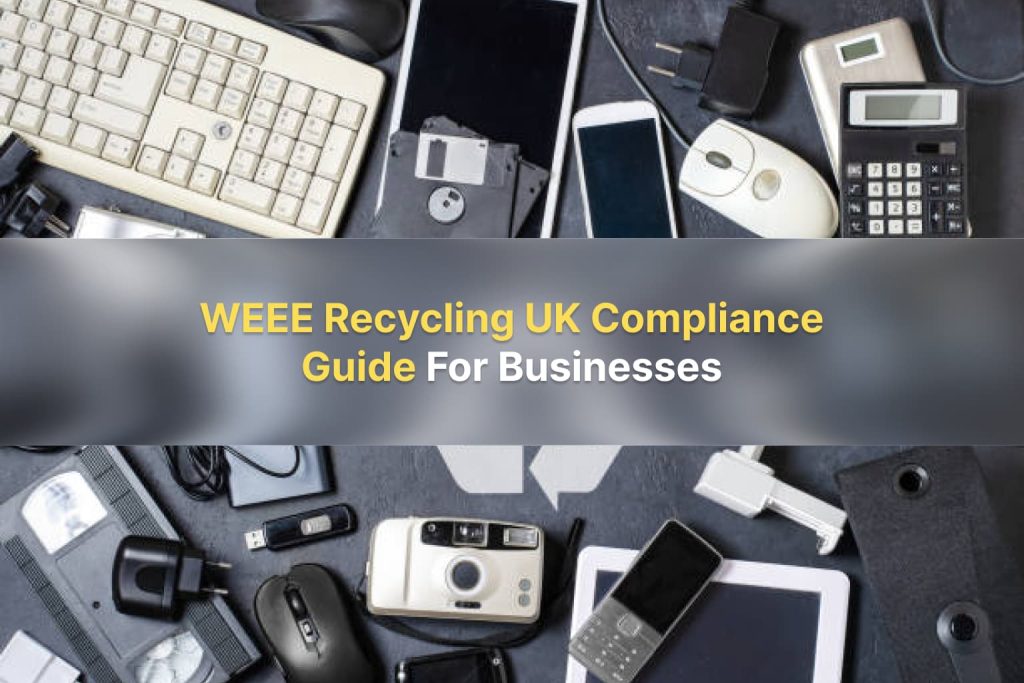
Common business WEEE streams include:
- IT and telecoms: Laptops, desktops, monitors, servers, networking kit, phones, tablets, docking stations, cables.
- Office equipment: Printers, photocopiers, scanners, shredders, franking machines.
- Small appliances: Kettles, microwaves, vacuum cleaners, fans, hand dryers.
- Lighting: Fluorescent tubes and certain lamps (often handled as hazardous, depending on type).
- Displays: TVs, digital signage, point-of-sale screens.
- Power equipment: Chargers, power supplies, UPS units, extension leads.
If you are unsure whether an item is WEEE, treat it as WEEE until confirmed otherwise. Misclassifying electrical waste is a common reason businesses lose control of their compliance trail.
Which WEEE Obligations Apply To Your Business? (Producer, Distributor, End User)
There is no single “WEEE compliance” duty that fits everyone. Identify which of these roles applies, and you may have more than one role.
If You Manufacture, Import, Or Rebrand EEE (Producer Responsibilities)
You are likely a producer if your business does any of the following:
- Manufactures and sells EEE under your own brand: You are placing EEE on the market.
- Imports EEE into the UK: Importing is a common trigger for producer responsibility.
- Rebrands EEE: Putting your name or trademark on equipment can make you the producer for WEEE purposes.
Producer responsibilities can include registration, reporting, financing obligations, and joining a compliance route (often via a Producer Compliance Scheme). GOV.UK explains how to register and what information you may need to provide: Register as a producer of EEE.
Practical takeaway: If you “put electricals on the market”, treat WEEE as a board-level compliance topic. Your obligations are not limited to how you dispose of your own old equipment.
If You Sell EEE To Customers (Distributor/Retailer Take-Back Duties)
Distributors (including retailers and some B2B suppliers) may have take-back duties, depending on how they sell and to whom. Take-back obligations often relate to providing a route for customers to return WEEE when they buy a replacement, or providing information about recycling options.
Practical takeaway: If you supply electricals to end users, check whether take-back applies to your sales model. Ensure customer-facing processes and contracts reflect this, rather than leaving returns to ad hoc arrangements.
If You Are Disposing Of Business Equipment (Duty Of Care As A Waste Holder)
Even if you are not a producer or distributor, your business still has legal responsibilities when you discard electrical equipment. In practice, compliance usually comes down to three things:
- Use compliant operators: Only pass WEEE to appropriate, authorised businesses (for example, licensed carriers and approved treatment routes).
- Prevent harm and leakage: Store WEEE safely and securely, and prevent parts going missing or being fly-tipped.
- Keep an audit trail: Retain the right documentation to show where the waste went and who handled it.
GOV.UK’s commercial waste guidance summarises the expectation to manage business waste properly and use authorised contractors: Dispose of waste: commercial waste.
Note: Waste rules can vary in administration across England, Scotland, Wales, and Northern Ireland. If you operate across multiple nations, align your process to the strictest requirements and confirm nation-specific paperwork expectations with your waste partner.
Business WEEE Compliance Checklist (Quick, Practical Steps)
Copy and adapt this checklist for your internal SOPs, procurement policy, or facilities procedures.
- Confirm your role: Identify whether you are acting as a producer, distributor, and/or waste holder.
- Create a WEEE inventory: Record what you dispose of, approximate volumes, and where it is stored.
- Segregate WEEE: Separate key streams (screens, batteries, lamps, mixed small WEEE, cables).
- Secure IT assets: Protect personal data and company data from loss, theft, or unauthorised access.
- Choose approved routes: Use a licensed carrier and ensure treatment is through authorised facilities.
- Capture paperwork: Keep WTNs and any hazardous consignment notes, plus data destruction evidence.
- Review suppliers annually: Re-check licences, insurance, and downstream transparency.
Step 1: Identify And Segregate WEEE (Including Batteries, Lamps, Toner Where Relevant)
Segregation reduces risk and makes treatment more reliable. Start with simple categories that match how WEEE is commonly handled:
- Screens and monitors: Handle carefully; they can be fragile and have specific treatment routes.
- IT equipment: Laptops, PCs, servers and drives need data security controls.
- Batteries: Often subject to separate handling requirements, especially lithium-ion.
- Lamps: Some contain mercury and should be kept intact and stored safely.
- Mixed small WEEE: Cables, peripherals, small appliances.
- Consumables (where applicable): Toner cartridges and printer consumables often need a distinct route, even if not always classed as WEEE.
Storage tip: Keep WEEE in a secure area with weather protection and access control. This reduces theft of valuable components and helps you maintain a clean audit trail.
Step 2: Prevent Data Breaches (IT Equipment And Storage Media)
WEEE compliance and data protection overlap heavily when equipment contains data, such as laptops, desktops, mobiles, servers, SSDs, HDDs, and removable media. Even “broken” devices can retain recoverable data.
Practical controls to reduce risk:
- Classify assets before collection: Identify which devices contain personal data, customer data, financial data, or sensitive IP.
- Decide on sanitisation vs destruction: Sanitisation (secure wiping) may support reuse, destruction (shredding) may be needed for high-risk assets.
- Keep chain of custody: Record serial numbers or asset tags, and document who handled devices at each step.
- Get documented outcomes: Request a data sanitisation report or certificate of destruction.
For data protection expectations, use ICO guidance as your reference point: ICO UK GDPR guidance.
If you need specialist support, Green Retech Recycling provides secure data destruction and broader IT asset disposal (ITAD) services designed to protect your organisation and keep evidence for audits.
Step 3: Use The Right Collection Route (Licensed Carrier, Approved Treatment)
A compliant route typically includes:
- Collection by an authorised operator: Use a licensed waste carrier for transport.
- Treatment at approved facilities: WEEE should be treated through appropriate authorised facilities, and not simply exported or “brokered” without controls.
- Clear downstream visibility: Understand where your waste goes, not just who collects it.
In practical terms, ask your provider how WEEE moves from collection to treatment, and how they separate items for reuse, recycling, or specialist processing. If you are arranging collections, start here: book a WEEE collection.
Step 4: Keep The Correct Paperwork And Audit Trail
Paperwork is often the difference between “we did the right thing” and “we can prove we did the right thing”. A strong audit trail usually includes:
- Waste Transfer Notes (WTNs): For most non-hazardous movements of waste.
- Hazardous Waste Consignment Notes: When hazardous waste rules apply (for example, some lamps, some batteries, and some items containing hazardous components).
- Asset lists and serial number capture: Especially for IT and high-value equipment.
- Data destruction evidence: Certificates or reports, depending on the method used.
- Supplier due diligence records: Carrier and facility licences, insurance, and contracts or service agreements.
Best practice: Keep a single “pack” per collection, containing all documents plus photos where helpful. This makes internal audits and client questionnaires far easier to answer.
Documentation: What Records You Should Keep (And For How Long)
Exact requirements can vary by waste type and UK nation, and your supplier may also have retention policies. However, as a practical compliance stance, many businesses keep waste documentation for multiple years to support audits, customer requests, and investigations.
Compliance-friendly approach: Retain WEEE paperwork for at least two years as a baseline for WTNs, and longer where it supports your risk management, contractual requirements, or data protection evidence needs. If hazardous waste notes apply, retain them in line with the relevant rules and your internal compliance policy.
Waste Transfer Notes (WTNs) And Why They Matter
Waste Transfer Notes record the movement of controlled waste from your premises to another party. They help demonstrate that you transferred waste responsibly to an authorised person.
A useful WTN pack should include:
- Description of the waste: Clear wording such as “Waste electrical and electronic equipment”, plus item types.
- Quantity: Weight, number of items, or containers.
- How the waste is contained: Pallets, cages, bins, boxes.
- Transfer details: Date, time, locations, and parties involved.
- Carrier details: Business name and carrier registration details, where applicable.
- Signatures: Confirmation of transfer by both parties.
Hazardous Waste Consignment Notes (When Applicable)
Some electrical waste is hazardous due to its components. If hazardous waste rules apply, you may need consignment documentation in addition to, or instead of, a standard WTN. Common examples that can trigger hazardous handling include certain lamps and some batteries.
Practical tip: Do not guess. Ask your waste partner to confirm classification and the paperwork required for your exact load. Build this check into your collection booking process.
Certificates Of Destruction / Data Sanitisation Reports (Best Practice)
For devices and media that may contain personal data or confidential business information, evidence of what happened to the data is crucial. Depending on your process, you may request:
- Certificate of destruction: Confirms physical destruction of media or equipment, often used for high-risk assets.
- Data sanitisation report: Confirms wiping standards and lists serial numbers and outcomes.
- Exception reporting: Flags drives that failed wiping and were therefore destroyed.
Learn more about what “secure” means in practice in our guides: what is secure data destruction, and how to choose a secure data destruction service.
How To Choose A Compliant WEEE Recycler Or Collection Partner
Choosing a compliant partner is a supplier due diligence exercise, not just a price comparison. The lowest quote can become the most expensive decision if paperwork is missing, treatment is not authorised, or data is mishandled.
What ‘AATF/ATF’ Means And What To Ask For
You will often see these terms in the WEEE chain:
- AATF (Approved Authorised Treatment Facility): A facility approved to treat WEEE in accordance with regulatory standards.
- ATF (Authorised Treatment Facility): Used more generally for authorised treatment. In WEEE contexts, you want clarity on approvals and permitting.
What to ask for:
- Where will my WEEE be treated: Names and locations of the downstream facilities.
- What approvals and permits apply: Evidence that treatment sites are authorised for the waste types collected.
- How reuse is handled: Whether items are tested and refurbished, and how failures are processed.
Questions To Ask: Licences, Downstream Transparency, Reporting, And Insurance
Use this short questionnaire when vetting suppliers:
- Can you provide carrier details: Confirmation that collections are transported by an authorised carrier.
- Can you provide an audit trail per collection: WTNs, hazardous notes where applicable, and itemised reports for IT assets.
- What happens to non-reusable equipment: Treatment method and downstream partners.
- Do you offer data services: Wiping and/or physical destruction, plus certificates and reporting.
- What insurance do you carry: Adequate cover for liabilities, including data and environmental risk where relevant.
- Can you support ESG reporting: Diversion from landfill, reuse rates, and material recovery summaries.
How Green Retech Recycling Maintains Compliance:
- Planned collections and controlled handling: We help businesses organise collections through scheduled pick-ups to reduce ad hoc disposal.
- Secure IT disposition options: We provide IT equipment recycling and secure destruction with documented outcomes.
- Transparent policies: Our published approach to compliance and handling can be reviewed on our policies page.
If you want to discuss your WEEE streams, collection frequency, or documentation needs, contact us here: Green Retech Recycling contact page.
Common WEEE Compliance Mistakes Businesses Make (And How To Avoid Them)
These issues come up repeatedly in audits and supplier reviews. Fixing them usually requires process, not perfection.
Mixing WEEE With General Waste Or Skipping Segregation
- Why it happens: Teams clear out storerooms quickly and bin everything together.
- Why it is risky: WEEE can contain hazardous components, and you lose control of downstream handling.
- How to avoid it: Provide labelled containers or a locked WEEE cage, and make disposal routes part of facilities onboarding.
Assuming ‘Recycling’ Equals Compliant Treatment
- Why it happens: Some providers use vague terms like “eco disposal” without evidence.
- Why it is risky: Without approved treatment and documentation, you may still be responsible under the duty of care.
- How to avoid it: Request proof of treatment routes, ask where waste is processed, and keep paperwork per load.
Missing Paperwork And Weak Audit Trails
- Why it happens: Paperwork is emailed to one person, not stored centrally.
- Why it is risky: You cannot answer customer due diligence questionnaires or defend your decisions if investigated.
- How to avoid it: Use a shared compliance folder and store a complete pack for each collection (WTN, notes, asset list, certificates).
Forgetting Data Security And GDPR Overlap
- Why it happens: Organisations focus on recycling and ignore residual data on devices.
- Why it is risky: Data loss can create regulatory risk and reputational damage.
- How to avoid it: Adopt a formal ITAD process and require certificates, especially for drives and devices with personal data.
For practical device preparation, see: How to clear an old computer before recycling.
Enforcement And Penalties: What Can Happen If You Get It Wrong
Non-compliance can lead to enforcement action depending on the nature of the breach and your role. Even when penalties are not applied, poor WEEE practices can create serious commercial consequences.
Legal, Financial, And Reputational Risk
- Legal risk: Breaches of WEEE rules, waste duty of care, permitting expectations, and data protection obligations may trigger investigations.
- Financial risk: Costs can include remediation, re-collections, storage, internal time, contract loss, and potentially fines or prosecution outcomes.
- Reputational risk: Customers and procurement teams increasingly ask for waste and data handling evidence, especially in regulated sectors.
Practical takeaway: Treat WEEE compliance like an audit topic. If you cannot prove what happened, assume it will be treated as non-compliant in a supplier review.
WEEE And Sustainability: How Compliance Supports ESG And Net Zero Reporting
Compliant WEEE management supports ESG goals by reducing landfill, improving material recovery, and enabling reuse where appropriate. It also helps you respond confidently to sustainability questionnaires and ISO-aligned environmental management processes.
Reuse Vs Recycling And Measuring Outcomes
Many organisations now aim to prioritise reuse, where appropriate and secure, before recycling. A mature approach looks like:
- Reuse (where safe and appropriate): Tested equipment can be redeployed internally, sold, or donated, provided data is managed, and the equipment is suitable.
- Recycling: Non-reusable items are processed to recover metals, plastics, and components through approved treatment routes.
- Measuring outcomes: Track weights collected, categories processed, reuse rates, and certificates issued.
If you need to align WEEE disposal with governance requirements, our data compliance guide can help: UK regulations for data disposal compliance.
FAQ: WEEE Recycling Compliance For UK Businesses
Do Small Businesses Have To Follow WEEE Rules?
Yes. Even if you are not a producer, you still have duty of care responsibilities when you dispose of business waste electricals. If you do place EEE on the market, small organisations may still have producer obligations depending on what they supply and how. Use GOV.UK guidance to confirm your situation and register if required.
Can I Donate Or Sell Old IT Equipment Instead?
Often yes, but you still need to manage risk and evidence. Key points:
- Data must be handled securely: Ensure sanitisation is verified and documented before equipment leaves your control.
- Record what happened: Keep an asset list with serials, transfer details, and the receiving organisation.
- Be honest about the condition: If it is not suitable for reuse, route it to compliant treatment instead.
Green Retech Recycling can advise on reuse-led ITAD options alongside secure destruction where reuse is not appropriate. See IT asset disposal.
What About CRT Monitors, Printers, And Mixed Office Equipment?
These are common items that need careful routing:
- CRT monitors: Typically require specialist handling and treatment; do not put them in general waste.
- Printers and MFDs: Treat as WEEE, and consider toner and consumables as separate streams where relevant.
- Mixed office WEEE: Consolidate into a planned collection and keep a clear inventory to reduce missed items.
If you are clearing an office, bundling everything into one controlled collection is usually safer than multiple informal drop-offs.
How Often Should We Arrange Collections?
It depends on your waste volumes and storage capacity, but most businesses choose one of these patterns:
- Regular scheduled collections: Monthly or quarterly for predictable streams and multi-site operations.
- Project-based collections: Office moves, refresh cycles, or data centre decommissioning.
- Ad hoc collections with a defined trigger: For example, when the WEEE cage reaches a set fill level.
If you want a recommendation based on your sites and equipment types, speak to Green Retech Recycling via our contact page.
Fun Fact: Why Old Electronics Can Be Surprisingly Valuable
Many electronics contain tiny amounts of precious metals such as gold and palladium in connectors and circuit boards because they resist corrosion and conduct electricity well. That is one reason compliant WEEE treatment matters; it helps recover scarce resources and can reduce demand for new mining.
Conclusion: A Simple Way To Stay WEEE Compliant
UK WEEE compliance is easiest when you separate the problem into three parts: know your role (producer, distributor, waste holder), use authorised collection and treatment routes, and keep complete paperwork and data security evidence. Build these steps into routine operations, and you reduce legal risk, data risk, and disruption during audits.
If you want a straightforward, documented route for business WEEE and IT equipment, explore WEEE recycling, IT equipment recycling, and secure data destruction with Green Retech Recycling.
Disclaimer: This article provides general information, not legal advice. Your obligations depend on your activities and location within the UK. When in doubt, confirm requirements using official guidance or professional advice.